≡ Menu

Going to the Farm

Every once in a while (not nearly often enough) we have a chance to head down to the farm for a day. We make sure the chickens have feed and water, load up the family, and load up Sophie and head down for a day of work, relaxation, and fun. I love to be outside working at the farm because it is such a difference from my normal day. And, I guess I just plain enjoy hard work. When I was in jr. high, high school, and college I detasseled corn. It was hard, hot, muddy work but I absolutely loved it. Plus the pay was good. Also, in high school when others were enjoying a hot summer day at the lake or the pool I was putting hay up in the barn for the Mochel family. I just enjoyed the hard work … period!

So, as we make plans to head down today (mostly to take my brother and sister home and show of our Dexters to the in-laws) I’m making a list of the things I would like to do in our short trip. Here is my list …

  • Take down Shaklee Basic H to worm cattle
  • Set up new electric fence paddock for the cattle
  • Build covered mineral feeder to feed kelp mineral and salt
  • Discuss winter wind break for cattle with Dad
  • Pick up materials or pick out materials for winter chicken shed

I’ll try and get as much done as possible, but there is never enough time when I am down there. Regardless of what I get done I know that I will have a great day and I’m really looking forward to it. Hopefully I’ll have an update for you tomorrow, and maybe even some new pictures.

{ 3 comments }

"Organic Transition" … an article …

Every once in a while I check out the articles and forums at camilla araujo podcastNewFarm.org just to see what is going on. You may remember I posted a link to an article a few weeks ago about a beginning dairy farmer who was getting out of the business because he just couldn’t make it financially.

Yesterday I came across another article about a dairy farmer on the site that dealt with his switch from a conventional dairy to an organic dairy. You can check out the article, “CASE STUDY: Transitioning to organic : Spring Brook Farm”, but clicking on the title.

The farmer in this article is not new to dairy farming. In fact while he didn’t grow up on a dairy farm he has been working no them since he was young. An interesting thing is that he went bankrupt on his first dairy attempt, but he stuck with it because as he says, “it is in his blood.” The article deals mainly with his transition from a conventional dairy (medications, corn silage, etc.) to an organic dairy that sells milk through an organic dairy cooperative. Most of his milk goes to Stonyfield (no relation to our farm) for their yogurt.

After my post yesterday about the frustrations of trying to go against conventional wisdom this article was a breath of fresh air. He was able to make the transition with out too much trouble, and he is finding there is much more value in farming organically. He finds value in the way he is able to raise his cows, how he treats the land, and through the checks he receives for his milk. Basically, organic was a stretch for him … it is something that looked good and is now working even better than it looks.

Here are a few quotes from the article that really hit home to me:

“I started out when I was 24 lost everything when I was in my forties, and started all over again with nothing when I was 44. I could go manage a farm for somebody else, but that wasn’t what I wanted to do. Independence is a fierce part of it. I gotta do my own thing.”

“When I was a kid, and people asked me what I wanted to do when I grew up, I always knew. I was driven,” Lyle says. “Things haven’t all been rosy. There have been a few detours, but I’ve stuck with it.”

“I really don’t know why more farmers don’t go organic,” Lyle says, “especially small farmers who pasture. If you’re set up for pasture and you’ve got 50 to 100 cows, it makes more sense.”

You see, it can be done … and in some ways if you are farming on a small scale you can do it better than the conventional farmers. Oh, the “it” I’m talking about … I’m talking about supporting your family through the farm work and living and working together as a family.

{ 0 comments }

New Blog Colors…

Okay, I have had a few people mention to me that the blog was difficult to read with the black background and white font. I decided I would switch to this one for a little while and see what people think. So… let me know if this is better, worse, or indifferent. I can try some other options if I need to.

Thanks again for everyone that checks out my blog. I update every day Monday – Saturday and just take Sunday off so there should always be some fresh content. I will continue to provide links or reviews to what I’m reading because that is how I’m building a lot of my plans and ideas when I’m not able to be “doing”. Also, from time to time you will get updates from work on the farm.

{ 3 comments }

Conventional Wisdom…

From Wikipedia: missjay95 death
Conventional wisdom (CW) is a term coined by the economist John Kenneth Galbraith in The Affluent Society, used to describe certain ideas or explanations that are generally accepted as true by the public.

Conventional wisdom is not necessarily true. Many urban legends, for example, are accepted on the basis of being “conventional wisdom”. Conventional wisdom is also often seen as an obstacle to introducing new theories, explanations, and as an obstacle that must be overcome by such revisionism. This is to say, that despite new information to the contrary, conventional wisdom has a property analogous to inertia, a momentum, that opposes the introduction of contrary belief; sometimes to the point of absurd denial of the new information set by persons strongly holding an outdated (conventional wisdom) view.

Sometimes I feel like this is the toughest battle a beginning farmer will face. I realize that it probably is not the case because I really haven’t experienced very much, but it is an obstacle that needs to be overcome.

While I have not really grown up on a farm, I did spend my weekends on the farm with my dad as a child and have been surrounded with farmers my entire life. As I begin to take steps towards creating a farm and a farm business I am running smack dab into the brick wall of conventional wisdom. In my search to create a farm that is profitable for my family and that will provide an income that we can live on, I kept coming back to alternative/outside-the-box types of agriculture. You know, things like grass-finishing beef, pastured poultry, agri-tourism, u-pick berries, premium priced meats, etc. I was encouraged about what I have read and the conversations that I have had with people that I have talked with. I have had talked with people who are making it work, I have seen toured farms that are doing it or that are almost there, and I have read many success stories.

Yet, whenever I talk with my family I run straight into the conventional wisdom brick wall, and it is starting to hurt. In not as many words this is the answer, “It works for some people, but that is not going to work here.” That just kills me! And, what kills me even more is then people suggest doing conventional farming as the answer.

I need to prove that it will be able to work. I have tried passing along books with hi-lighted sections so people don’t have to read the whole thing. I have related experiences I have had farm tours. And, I have passed along articles from and about people that are farming outside of “conventional wisdom”. But, that is just regarded as “propaganda”!!!!

I am not broken, but I am frustrated. It is obvious that there are farms out there not making money, yet they aren’t willing to try something different. I thought that these alternative farming methods and relational direct marketing were really starting to take hold … in fact I was worried that I had missed the boat. I guess that not everyone is convinced yet, so maybe there is still room for me.

What do you think?

{ 8 comments }

Salatin vs. Avery Debate

**Bloggers Note: I write my blogs ahead of time now so I can post them first thing in the morning, but yesterday I posted a blog that was meant to be posted today so that’s why the titles and writing seem out of sync. bhad bhabie nude leaks Just so you know.**

Okay… I realize I’m going a little heavy on the Joel Salatin information lately. I don’t want you to think that he is the only guy out there and that I’m totally locked in to his systems and mindset, but he does write a lot and put a lot of information out there. I promise … this post and the next one will be regarding Mr. Salatin, but after that I will hit some other sources or talk a little bit about some things happening around Stoneyfield.

I came across this DEBATE between Joel Salatin and Dennis Avery who was the director of the Center for Global Food Issues when this interview occurred in July of 1999. By clicking on the link you can read the debate between Mr. Salatin and Mr. Avery as the answer questions from callers on a radio show. It is a very interesting read because they come from two very different view points. Mr. Avery is a supporter of high yield chemical farming while Mr. Salatin is all about locally based farming providing for the area surrounding the farms.

I think the biggest thing I saw while reading this debate was the huge difference of world view between the two men. Mr. Avery believes that we need to rely on science and high production models in order to feed the word while Mr. Salatin believes we need to change our production models and mind sets. I believe we need to change our world views in general so I did find myself siding with Mr. Salatin on many points. I think this is the greatest exchange in the entire article and really speaks to the difference between the two view points:

Host Jeff Ishee: Dennis and Joel, it’s certainly been an entertaining two hours and a fascinating conversation. I had four pages of questions, and I haven’t gotten to a single one yet, and I’m bound and determined to ask at least one question. What role do you think that government should play, both on the farm, and in agriculture overall?

Avery: I think government should be a player in the research game, and I think that the government needs to be very aggressive in making sure that American farmers get the opportunity to help contribute to feeding a larger, more affluent population that we are going to have in the year 2040. That means eliminating the trade barriers and opening the playing field to everybody.

Salatin: Well, I don’t believe that we should have a USDA. Period. All it is, is collusion with the multi-national corporations, and they stack the deck and create all this scientific information that’s biased and prejudiced. We don’t get good research. I’ve watched it for forty years come out of the cow colleges, the land grant universities. Virginia Tech figures out how to kill a bug, and the environmental scientist group at the University of Virginia figures out what else it killed. That’s basically the type of research we have. So, I don’t think there is any place for the USDA. We’d be a lot better without it at all. Turn it into a free market . . .

Avery: But then you’d have only the companies.

Salatin: Ah! But I can compete with the company. But I can’t compete with all the academic fraternization that occurs with the collusion between the bureaucrats and the companies themselves. On equal footing, we’ll compete fine. Privatize it, and we’re in business.

If you read the debate let me know what you think. I really enjoy reading these sorts of things. While I completely believe that doing is better than reading there is only so much doing I can do when I live over an hour from the farm … so, for the rest of the time I’m trying to prepare myself for the marketing of the farm and part of that is knowing why I do the things I want to do.

{ 3 comments }

Last of Joel Salatin for now…

Okay, I know that I’ve hit Joel Salatin a lot here lately (to be fair, I did have a lot of Allan Nation posts lately!), but this will be my last … Vico inly fans for a little while. If you click on this LINK you will download or be taken to a PDF of an article from the November 2002 issue of Acres USA. The article by Mr. Salatin is titled, “Balance Sheet Switcheroo :: Assests Become Liabilities in Industrial Ag.” This is another, “shape my viewpoint,” article that I found interesting to read. He talks about the culture shift in agriculture that has turned the historical assets of agriculture into liabilities.

In the article he lists 10 specific cultural shifts from assets to liabilities. Here are a few that I found especially interesting:

#1. Feeding ourselves used to be a matter of national pride.

Being a part of the farmers who feed the people in my area is definitely something I would be proud of! But, our agribusiness now likes to buy beef from South America rather than from our own back yard.

#6. Once upon a time, farmers and related agribusinesses hired their neighbors.
My favorite place to shop in town is our local Coast Hardware store. It is owned and run by an older couple that have made that business their life. When I go in looking for a part and I don’t know exactly the size I need, they load me up with three or four and tell me to bring back the ones that don’t work when I get a chance. That is the type of community that will make our country and our families strong!

#7. During most of America’s history, farmers peddled their wares in town.
This is all about cutting out the middle man and bringing the profits back to the farmers. Think about those Cheerios you buy at the store … how much do you think the farmer gets of that $3.00 box of food?

#10. The early American ideal of the gentleman farmer, the noble, landed yeoman, was once revered as a cornerstone of the true wealth in this nation.
We need to restore the cultural view of farmers, and the only way by doing that is creating relationships between the farmers and the buyers. Again, think about those Cheerios … do you have a relationship with that farmer?

Another quote I especially enjoyed is this one:

One of the greatest assets on a farm, in my view, is the sheer ecstasy of life. The priceless enjoyment of life’s spontaneity must now bow to the unrelenting predictability of mechanized life. What an unfortunate change on the balance sheet.

I encourage you to check out this article. Like the last couple I have posted it speaks to shaping your world view and why we do the things we do (or in my case … what I want to do). But, I will tell you that it makes me want to farm and farm differently…

{ 0 comments }

Farming and Business Week

Check out “A New Push to Make Farming Profitable”. This is an article written about Joel Salatin’s Polyface Farm from August 10, 2007. I know it is a few weeks old, but this is the first time that I have come across it. It is a pretty interesting article where he tells about some of the financial basics of his farm. I was pretty impressed that he makes $700,000 per year on his 550-acre farm. The one question I would have is whether or not that includes his book sales and speaking engagements. According to his website he charges $3,000 plus expenses for each speaking engagement … that being said, I would listen to him whenever I had the chance!

I don’t have the need to desire to gain $700,000 on the farm, but I do think that it shows what is possible. It is great to see his business plan getting publicity in a business magazine. His popularity is growing every year and there are quite a few people who are beginning to duplicate his model, but I still believe there is room for more people willing to do something different. I would like to know some more about his e-mail buying club. That seems like it would be something to pursue if we ended up on land near my dad’s farm which is about 100 miles from a big city.

I will leave you with this quote from the article. I think it best describes some of my fears when it comes to farming and the land a family needs to farm…

“The growing demand from legions of direct customers has led Polyface to lease an additional 700 acres of pasture over the last three years. Salatin says the profits from the weekend-farmer seminars as well as sales from instructional books he’s written “are allowing us to make the investment without having to resort to loans,” which are another bugaboo of traditional farming.”

The original 550-acres he started out with was in his family so he didn’t have go out and buy land … now he can expand his operation with money from speaking engagements. Hmmm… maybe I can turn this blog into my money maker to finance my land!

I would love to hear any of your thoughts on this article or experiences you have had hearing Mr. Salatin in person. Thanks for reading!

{ 5 comments }

Family Farming…

There are family farms, and then there are family farms… There are 1,000 acre plus operations run by a group of siblings in the form of corporation, and then there are 200 acre or less farms that are run by grandparents, parents, and children. They are both “family farms”, but they are not alike. One is run like a corporation, while the other is run like a family. One may not include children because everything is done on such a large and grand scale, while the other may not survive without the children. One may be full of dangers around every corner from big machinery, grain bins, and more … while the other just might be family friendly.

I realize that I may have just over-generalized things there, but I also know many people my age that grew up on the large “family farms” who never did anything farm related and couldn’t wait to get off the farm so they could live in town and be closer to the things they enjoyed. And, in some senses their “farm” life was no different than a life of kid in the city. One of the many appealing things of farming to me is the family aspect. Again, I may be romanticizing things a little, but I envision our family working, playing, and growing together on a small sustainable farm. A safe place to raise our children where they will be surrounded by healthy hard work, the beauty of God’s creation, and the family that loves them. I found an article by Joel Salatin from the June 2000 issue of “Acres USA” that speaks specifically to family farming. The article is entitled, “Creating a Farm Life Your Children Will Treasure :: Family Friendly Farming”. You can read the entire article by clicking on the title.

It is a great article full of what I believe are very insightful thoughts. Here is one quote that really resonated with me and my desire to farm with my family:

“People kept telling me when Daniel was little, ‘Oh, he’s great now, but you wait, he’ll be a pistol, you won’t be able to control him, and all kids go through rebellion.’ But they were all wrong; it doesn’t get any better than this. And it’s not because I’m a great dad, it’s because we have time. People who say it doesn’t matter how much time you spend with your children, it is just the quality — it isn’t true. All we have is time. If we can invest it in these kids and allow them to have projects that provide opportunities to praise them, they will develop team spirit and involvement in the enterprise.”

I can’t tell you how many times my wife and I have heard this same type of quote from people all around us … at the store, among family, and at church … instead of arguing we just shrug it off now, but hearing first hand experiences like that of Mr. Salatin just increase my desire to move to a farming life.

If you are thinking of farming or are farming right now with your family I encourage you to check the article out. Also, if the book is anything like the article I suggest looking at Joel Salatin’s book, “Family Friendly Farming :: A Multi-Generational Home-Based Business Testament”.


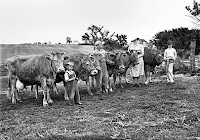
**Just so you know, the picture was taken by Pete Wettach. You can check out an amazing book of his photo’s by clicking here ==> “A Bountiful Harvest”**
{ 1 comment }

The Amish Neighbors

The rain today has me thinking about my dad’s Amish neighbors. They planted five acres of alfalfa on our farm and it was cut on Wednesday. We haven’t had good drying weather lately and this morning when I woke up it was raining. elsadreamjean nata lee nude So, I thought of the Amish neighbors and their alfalfa sitting in the field … in the rain …

When my family moved to the area over 10 years ago there was not an Amish community. This group moved in about 5 years ago, with most of the original members coming from Wisconsin with lots of money in their pockets. They quickly raised the price of land in the area by offering large amounts to buy out people so the could live relatively near each other. It has been very interesting watching the Amish interact and live in their community.

On one hand we sort of regard them as a joke. The Amish in this community do very little farming or riding around in buggies. Most of them work some sort of construction job and have drivers that they hire to take them all over the place. In fact they have become so dependent on their drivers that they call them up when the only have to go a short distance. Which brings up another point … they have phones … not in their houses, but rather in little “phone houses” outside of their homes. It almost seems like the are marginally living the Amish way. When riding in the car they want to listen to Amish music, they buy the same junk food for their lunches that we do, and in this community they all have running water in their houses (no toilets though).

On the other hand though we have a lot of respect for them because of their community driven lifestyle. One example that I find very interesting is of a man who was having some serious financial problems. He wanted to start up a saw mill so we began taking out loan after loan after loan … well, he had some problems with his partner so he decided to build his own mill a couple years later … which meant he took out loan after loan after loan! One day we drove by his home and saw the beginnings of a large new building to house his saw mill. Two months later we drove by and nothing had happened on the work. I assumed that he had run out of money, but in reality the elders of the community had stepped in and taken control of his money. The community came together and paid off his loans and then the men (I believe there was three) that were in charge of helping him put together a plan for him to begin work before he spent any more money. Now, his new mill is up and going, and if the number of logs and the piles of cut lumber mean anything I believe he is going on the right path now.

This type of community is unheard of in our self-isolated 21st century world, but I have a feeling that we would be better off if we could take some advice from this Amish community. As my thoughts turn to building a small family farm that is profitable and provides a comfortable living for my family I realize that a community will need to be a part of the equation. I don’t know how it will work out, but I know that a community will make life much better!

On another note… Bill Wilson of the One Acre Farm Blog sent me this LINK to an article by Joel Salatin that was original printed in ACRES USA. It is a very interesting article about promoting polycultures on the farm and I encourage you to check it out!

{ 1 comment }

Quality Pasture :: Chapter 14 Book Report

The final chapter of “Quality Pasture” by Allan Nation is titled “The Next Big Thing.” This chapter is just a culmination of the thoughts throughout the entire book and gives one last example of a farmer that is doing things different from the conventional farming structure. Mr. Nation does realize that there are risks in going out and doing something different than the masses, but there is also a great reward. Also, there is a great comparison list of indicators for traditional farm success and quality pasture success. Things like traditional equals big tractors and monocultures while quality pasture equals no tractor and diversity. Or traditional is about producing beef and production per cow while quality pasture is about harvesting grass and profit per acre.

All in all it is a good wrap up for the book and acts as an encouragement for people to get out there and become grass farmers instead of cattle farmers or other livestock farmers. Also, you need to remember that this book was printed in 1995, so twelve years later we are probably further down the road to wide scale grass farming which means there will be more information out there to help beginners and seasoned veterans get started. I have really enjoyed reading this book because of the very technical details that Mr. Nation provides about growing very high quality grass. I would have no problem recommending this book to anyone interested in become a grass based farmer (remember how much I loved the last chapter), but would be especially helpful for someone living in the south or wanting to run a grass and grass silage based dairy operation. While I’m sure that it doesn’t go to the complete depths of information, it is a great overview of the ideas and source of specific pasture management plans.

Now, I don’t know what I’m going to read! At the moment I am re-reading Joel Salatin’s book, You Can Farm: The Entrepreneur’s Guide to Start & Succeed in a Farming Enterprise. And highlighting some of the most interesting parts for my own encouragement, planning, and learning. But, I’m also finally sending in my subscription to the “Stockman Grass Farmer” magazine which is edited by Mr. Nation. I think that will give me a new source of information each month and I’m really looking forward to receiving my first issue.

Don’t forget, you can pick up your own copy of “Quality Pasture : How to create it, manage it, and profit from it” by surfing over to the Stockman Grassfarmer Bookshelf.

Related Posts Plugin for WordPress, Blogger...

{ 2 comments }