≡ Menu

Worms…

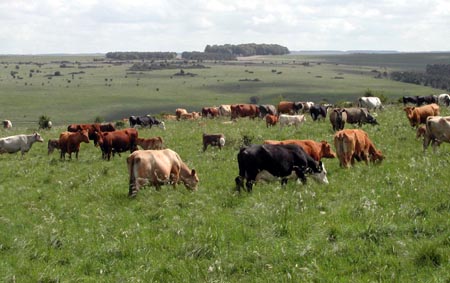
Okay, not just any worms but rather internal parasite worms. Pretty fun subject huh? Well, yesterday I received my December issue of “The Stockman Grassfarmer” in the mail and somehow after flipping through the pages the first article I read was about worms a.k.a. internal parasites. The article is by Allan Nation and talks about pasture-rotation system that was started on research farms in New Zealand back in the early 1940’s. It is part informational article about the benefits of pasture rotation for controlling parasites in young calves and part, “this is how management intensive grazing really got started,” article.

Research at the Ruarkura Animal Research Station in Hamilton, New Zealand led to a rotational leader/follower system in order to help control the parasites that were killing many of the countries dairy calves. Despite the use of wormers the calves were having problems both in the short term, and in the long term because they were not building resistance to the worms. One of the researchers, Dr. C.P. McMeekan, says that internal parasites are a normal part of a pastured animal’s life and that they can develop resistance to them if they are constantly challenged by them. The problem was that either the calves were dying because of overload or the were having problems in the future as the parasites became resistant to the wormers and the cattle hadn’t built up the strength to combat them.

Their dairy calves were allowed access to pasture early and could even be weaned on to grass as early as eight weeks according to Mr. Nation’s article. Once on the grass the rotational system began. The researchers found that parasites live on the bottom two inches of the plants in the pasture so the obvious solution to them was to not let the calves graze at that level. In order to accomplish this they divided the pasture in to paddocks (here is the history part) so that the baby calves could graze ahead of the cows. Once they had that separation accomplished the next step was the rotation. To keep the calves from hitting that bottom two inches they would rotate them daily … and daily or at most every other day … is the key.

They found out that their research and system worked. The calves still had a parasite load, but they could deal with it partly because they system fought them and partly because they were eating such high quality forages. Thus, rotational grazing was born … or something like that.

The pasture rotations will also combat parasites if you are running different types of livestock through the pastures because that helps break the cycle also. It is a pretty fascinating topic because really what it all goes back to is how the animals were created to function. Now we are just trying to capture what they did on their own and do it in a controlled environment.

{ 0 comments }

The Annual Plow Day…

For the past few years my Uncle has hosted a plow day at his farm in central Iowa, and this year was no different. Everyone readily admits that they aren’t plowing because they have to, but rather because they want to. While I realize the mold board plow isn’t really the greatest tool to be using anymore it does have it’s place, and doing these plow days are almost like doing an reenactment.

The fields where we plow are the fields that my Grandfather farmed (and plowed) and the tractors that my family uses at the plow day are Minneapolis Moline … just like my Grandfather used and sold. So, it is really about slowing down and appreciating our history … which is a very important thing to do. It is great to spend time with my family and the neighbors that have also farmed in the area for years. In fact the farming knowledge at these gatherings is almost intimidating.

We had a great day for plowing. It was cool, but there wasn’t any snow like last year so the plowing was easier and the crowd was bigger. There were plenty of Minneapolis Moline tractors there (most owned by my Uncle), a few John Deere, a few Farmall, a Cockshutt, and various other colors. I enjoyed hearing the sound of the tractors working under load and the men standing around eating and enjoying the fellowship of farmers. Last year I spent a lot of time taking pictures and shooting video for a little movie I made for my Uncle, but this year I spent most of the time plowing and didn’t take any pictures. Because of this I had to wait until my Uncle had a chance to send some pictures!

It was an enjoyable day and I encourage everyone to check out a local plow day around them. It is like experiencing a piece of history and celebrating the hard work of those that came before us. In case you are wondering I spent most of the day driving a Minneapolis Moline M5 with a three-bottom plow and a Minneapolis Moline M670 Super with a three-bottom flip over plow. The flip over plow is mounted on the three-point hitch and you just flip it over at the end of the pass and turn around so you don’t leave dead furrows or have to go in a big pattern. It was pretty fun!

{ 2 comments }

What Are You Willing to Sacrafice…

This post may be more along the lines of a philosophical post rather than an informational post, but it is something that I have been thinking about quite a bit as we discuss, dream, research, and plan for our hopeful move to farming. Right now my family (wife and two children) lives a pretty frugal life. We don’t eat out much, we don’t eat prepared foods, my wife is a very frugal shopper, we don’t have extravagant things or clothes, and we keep track of our spending very closely so we know where our money is going. Besides that, we really try to keep our “stuff” level down. If we are bring things in we try to move things out that we don’t need or used (sometimes we sell, sometimes we give, and sometimes we donate). In the long run we believe that will save us money, space, and frustration. Basically we are always looking for ways to save a little here and a little there.

By the worlds standards we may be a little “overly frugal” or cheap! Because of our watchful eye we have been able to stay out of debt and able to save money each year. But, we are always looking for ways to cut corners because we know that in order to get to the farm we will need to sacrifice. Sacrifice is something that my generation doesn’t always handle too well. I will be the first to admit that I was raised in a pretty comfortable life. We were no where near wealthy, but my family sacrificed so that I could have a lot of the things that I desired. That is the case for most of the people in my generation and now that we have reached adulthood we don’t really want to go through the same stages that our parents went through.

Oftentimes we don’t realize that our parents spent time living in small houses or not ever eating out because all we remember was our nice three or four bedroom house and weekly pizza take-outs or eating out. But, if we are going to be able to reach our dream of farming we are going to have to make sacrifices now and as we truly begin the farm.

So, what are you willing to sacrifice? Are you willing to scale back the “American Dream” lifestyle (probably a good idea no matter what you want to do)? Are you ready to simplify your life by not purchasing or hording as many “things”? I believe you will only be able to reach your goals if you sacrifice. In the coming weeks I am going to be spending some time putting together some goals for they farm dream in the next year. In doing that I’m also going to have to spend some time thinking of sacrifices that I can make to reach those goals.

{ 9 comments }

Purebreed Livestock or Not…

Lately as I have been my family and I have been thinking about adding livestock to the farm, other than the cattle or horses, I have been pondering the idea of having purebred herds or just grade market herds. If you have been following the blog for awhile you will remember that we are specifically thinking about adding hogs or sheep in the not to distant future. But, should we try and go with purebred breed or just a market/grade/crossbreed?

Right now we are somewhat locked into purebreds with our Dexters. We now have nine registered cows/heifers and are in the process of looking for a herd bull so it is important to me that our bull is registered also. I don’t think it would be wise to crossbreed the Dexters that we have now, but we could always try and go another route in the future. But, I like the direction that the Dexters will take us and I love the many great aspects of the specific breed … for the time being we will only have a purebred registered cattle herd.

I know that Joel Salatin and some of the other authors along his lines (Allan Nation, Gene Logsdon, etc.) would probably advise having crossbred or grade livestock rather than registered purebred animals for a few reasons. One of those factors might be plain old cost, but another and possibly more interesting factor is the idea of “hybrid vigor” or heterosis. Basically the idea of hybrid vigor is that if you cross two distinct breeds you will gain the best of those two specific breeds. There is a whole genetic basis for this and all sorts of good smart people facts and figures on the topic so I suggest you check the link above for a basic overview of the topic.

Also, if you would like to know more about crossbreeding systems or other reasons for having a crossbreeding program I encourage you to check out this LINK from Virginia Tech University. It gives some great information and goes into greater detail.

While I find the whole heterosis idea interesting the financial thing does speak very loudly to me. Most of the time you will have to pay a greater price to have the registered animals. Thus it will take more money, and in my case a longer time, to build up the herd to the size you would like. I intend on having a closed herd once we have built it up, but it does take outside animals to get to that point. As we look at sheep and hogs the higher prices do seem a bit daunting … especially when we are talking about edible animals. Most people don’t care if they are eating a Dexter burger, Angus burger, or whatever the steers parentage is burger (notice I said most people because I think Dexter burgers are the best!). With that in mind it is difficult to go the purebred route (again, I realize that I already have gone that route).

One thing really keeps drawing me to the registered livestock side of things though … heritage breeds. History is my passion and keeping history alive is equally part of that passion so I have been drawn to the heritage breeds from the beginning. I have a couple of thoughts that I will just through out there about these breeds… First of all, I think it is important to keep these breeds going because they are an important part of our human history and a link to that history. If we don’t remember our history … well, that is just a bad thing! But, it is also important I believe to remember that these heritage breeds were developed and raised under the exact (or close to it) conditions that I wish to farm within. Many were selected (all breeds are crossbreeds at some point) because they were good foragers, were hardy, easy breeders, good mothers, and on and on and on. So, if it worked then I don’t see why it can’t work today.

I still haven’t decided which direction to go, but it is an interesting debate in my mind nonetheless.

**The picture at the top is of an Ossabaw Island Pig at the Living History Farms in Iowa. They have them at the Living History Farms because they are similar to what an 1850’s pig would look like**

{ 11 comments }

A Quick Saturday Morning Post…

A busy day is ahead so I just thought I would through up a quick little post. Yesterday we finished getting the yard, garden, and shed ready for winter. We did a last little bit of cleaning up in the garden and then rearranged the shed so that we could get to our winter shovels and put up the garden fence and tomato cages. Also, we spent a few minutes doing a last minute upgrade to the chicken pen. We knew a potential ice/freezing rain storm was on the way and we wanted to give them a bit more cover … so we added a nice blue tarp! Ahh, the wonders of blue tarps. So, as I type this now I look out on the sleet/ice/freezing rain coming down and I’m glad we got the work done yesterday.

I did come across an interesting article yesterday about Jack Erisman and Goldmine Farm in Illinois. It is a case study from the New Farm website that chronicles the farms transition to organic crops. It is a pretty interesting article because the transition spanned quite a few years practically starting in the early 1970’s and coming to completion around seventeen years ago. It is a fairly long article, but I encourage you to check it out because it tells about a 2,000 acre family farm that moved from conventional chemical crops to a seven year organic rotation along with a cow/calf herd.

Here are a few interesting excerpts from the article to pique your interest:

  • Ultimately, Jack’s education and life experiences had an impact on the way he approached farming. By the end of 1969, he had come to realize more fertilizer and chemicals didn’t necessarily mean more profit. He also began to consider human and agricultural history, and came to realize that humans grew their food for thousands of years without the benefit of synthetic chemicals.
  • To this day Jack has never collected a single government payment.
  • Indeed, the first years were difficult, but he had a business plan, stuck with it and made a profit.
  • Jack talks to many beginning organic farmers, and recommends they put fields going into organic into a small grain—wheat or oats—then into grass/legume cover crop, let the land rest in this state for a couple years and take a hay cutting or graze if some income is needed from the field.
  • Jack does not participate in government programs for philosophical reasons. He has built waterways and terraces on his farm without financial assistance from the Soil Conservation Service. “Why should I ask the government to help me with something on my own land that will bring me benefit?” He has gone to government agencies for information, but he would consider it hypocritical to accept money from a program that he doesn’t believe is right.

There is a lot to think about in these little excerpts so I hope you check out the entire article!

{ 0 comments }

More Ultra High Density Grazing…

After I my post on Ultra High Density Grazing a couple weeks ago I noticed by way of e-mails and such that quite a few people were stumbling on to this blog while searching for information about the topic. This may be the “next big thing” in grazing … or maybe it is the “big thing” right now. I am not an insider in the grazing circles yet so I don’t know where it stands as far as wide spread acceptance. But, I do know there are quite a few people out there looking for information and I know that I have had a tough time find a lot of information about it. So, I though I would blog again about Ultra High Density Grazing and see if the community of people that read or stumble onto this blog could give some more insight into the subject.

Krystle commented on my first post and mentioned that Greg Judy (author of “No Risk Ranching”) is switching to Ultra High Density from Management Intensive Grazing and because of that switch the are becoming more profitable. Also, someone else commented or e-mailed clarifying my understanding of the subject. It is interaction like this that makes learning about grazing so much easier!

Basically, if I understand correctly, Ultra High Density Grazing is placing a high number of cattle on a small space so that they eat down the grass fairly quickly (maybe leaving around 30% forage?) then moving them to the next paddock. I believe we are talking about two or three paddock moves a day because of the high stocking density. Sometimes is this also called “mob grazing”. It seems like the basis for this practice comes from imitating the large herds of American Bison on the plains of the Midwest and West. Those large herds would move through an area eat it down quickly and then just keep moving. If only paddock switches were that easy!

I think it is a very interesting idea. Those that are doing it are falling in love with it, from what I understand, and they are really increasing the carrying capacity of their land. After reading a little about Ultra High Density Grazing a few thoughts and questions do pop into my mind. First of all, I think if you are really going to take advantage of this method you will need to have a good source to sell your beef to. If you are selling directly to the consumer I could see easily over producing for your market and then having to dump some animals (unless maybe you are doing something along the stocker lines?). Also, I think I would have to experience and learn from doing MiG grazing before I tackled something like this. Another question that pops into my mind is what about dry seasons. If you have a much higher amount of cattle than your normal MiG or continuous grazing stocking numbers what happens when you have a dry summer? Do you have to dump cattle, should you be irrigating anyways, are you going to have to feed stored forage? That also brings up another question … what about winter? Is this a better system for stocker cattle on large ranches or can it work on smallish farms also?

Ultra High Stock Density Grazing is a very interesting topic and I would look forward to learning more about it. If you have anything to add, correct, or discuss please make sure you leave a comment … also, if you have some good links or books make sure you let everyone know about those!

{ 3 comments }

Hansen’s Farm Fresh Dairy

While at one of our three Thanksgiving parties my wife’s Aunt shared with her about the milk that they buy that is from a local producer. (On a side note, everyone seems to be telling us about things like this now that they know the direction we are going so it is kind of cool.) The milk comes from Hansen’s Farm Fresh Dairy of Hudson, IA and the dairy has a pretty cool story behind it.

According to an article I found over on the Iowa Farmer Today website they have a 150 head dairy herd that supports five families … yep, you read that correctly … FIVE FAMILIES! The dairy farm has been in the family for a while, but as each child graduated school they went out into different fields of work and worked hard just like the family has always done. Somewhere along the lines though some of the siblings decided they would like to get back to farming but they knew that 150 dairy cows would not support five families, so they would have to do something different … something value-added … something unconventional!

They family decided the needed to sell their quality milk directly to the consumers, so with the their own determination and help from the inspectors (see you can get them to work on your side from time to time) the were able to build their own creamery from the ground up. They now sell their whole and skim milk (along with other items) at area stores and a few local eateries. The command around $3.00 per gallon (not bad in todays milk market) and say that they are, “going back to the way milk is supposed to be,” according to Brent Hansen.

While they are not an organic or naturally certified dairy they do not give their cows any hormones to increase milk production. Mr. Hansen says, “It is important to us the cows have the least amount of stress possible. We could push them harder — feed more grain or give growth hormone shots but there is a cost to that, and for us it’s not worth it. Plus, there is much consumer concern.” It sounds like they are really tackling this from right direction and making it work (I wonder if they would every consider having a grass only herd?)

A final encouraging thing about their dairy is that they are getting back to the milk is supposed to taste. They do not homogenize their milk so there is a cream line in the bottle. According to the Hansen’s all it takes is a little consumer education (and I’m a sure a taste test doesn’t hurt) that all you need to do is shake the bottle up a bit and you are good to go.

This is pretty exciting stuff that is happening right here in Iowa. I encourage you to check out their site linked above and the article that I mentioned. If you would like to read more about their farm you can check out the links below.

Agri News Article

Waterloo/Cedar Falls Courier Article

{ 2 comments }

Organic Farmers Share Tips…

This past week at a Thanksgiving party I picked up an article from the Iowa Farm Bureau Spokesman (November 7, 2007 issue) that my father-in-law had been saving for me. It was just a short article about a conference that took place in Sioux City, IA, but it did give me some encouragement to see what is happening in my state when it comes to unconventional farmers.

The speaker at the conference was Kim Alexander who currently lives in Texas. An interesting thing about his story is that he had previously lived in Iowa and his family owned farm land. He was not able to farm on the family land because the family decided to put it into the Conservation Reserve Program (new at the time). I don’t know all the details, but the article says that he then learned of Joel Salatin and his principals on “growing food people want to eat and how to direct market our farm products” so he decided to grab hold of those ideas and put them to use on his Texas farm. I wonder to myself why he wasn’t able to stick around here in Iowa … maybe this is an illustration of why it is so difficult for young farmers (even those that have farming in the family) to get started in farming. Oh well, he is a making a go of it in Texas (although I’m glad I’m up here in Iowa!).

It sounds like he is doing the Salatin thing all the way around. They have a 40-head cow/calf herd, 2,000 broiler chickens, 1,400 laying hens, 300 turkeys, and a custom poultry-processing operation (that is a good value added option). It is pretty exciting that his family (mom, dad, and eight children) are making a go of it on the farm, but it is even more exciting and impressive that they are doing it on 300 acres of land … that they don’t own! Check out what Mr. Alexander has to say about that: “We rent and lease, for $100 a year, from the city people who go out and buy this expensive $7000 an acre land and then haven’t a clue as what to do with it.”

That is pretty exciting. The one hurdle that most people always point to is the high cost of land and the lack of availability. I have heard lots of people criticize Mr. Salatin because they believe his ideas don’t translate to other farmers because he started out with a serious amount of land. But, the Alexander family started out with nothing … in fact they might have had a chance at family land, but ended up doing it on their own. Mr. Alexander said in the article, “The shortage here isn’t land, it’s the shortage of warm bodies who know how to husband the land.”

They market their chickens and eggs to local grocery stores and white table-cloth restaurants, but they do other things to make their farm profitable that are slightly more “outside-of-the-box”. They collect used vegetable oils to fuel their trucks and build their own equipment for the farm. What an encouraging article for me. Sometimes I wonder if the farming idea is even possible, but when I read articles like this I get another burst of energy and continue to push on.

{ 6 comments }

The Contrary Farmer :: Chapter 5 Book Report

Last night I finished reading chapter five of Gene Logsdon’s book, “The Contrary Farmer”. The chapter was simply titled, “Water Power”, and was what I would consider a more philosophical (like the whole book) chapter than a practical chapter. But, it did bring out some good points to consider and Mr. Logsdon gave a big plug for living in the Midwest … Pure D3vil bhad bhabie leaked onlyfans which made me happy!

The opening paragraph sums up the theme of the chapter:

“As an agronomist what plant nutrient is the most important, and you will be treated to a short course on nitrogen, phosphorous, potash, and a host of trace minerals necessary for plant growth. As a farmer that question and he will unhesitatingly answer: water.”

Water is a very important part of your farm. It is important for your crops, it is important for you livestock, and one could argue that it is even important for you lifestyle (ponds, creeks, fishing, sitting and watching, etc.) Mr. Logsdon touches on all of those important things in this chapter along with touching on some ways for the “Contrary Farmer” to make money from their ponds, creeks, or marshes.

As I mentioned he makes a great plug for my homeland, the Midwest. He concludes that the reason America is such a great agricultural country is not because of anything we have done as people, rather it is a combination of a large amount of wonderful soil and just the right weather. It is like those two have combined in a perfect storm to create amazing farming potential. But, he admits that he often hears of people who say that the would rather farm in the West or the New England area. Mr. Logsdon presumes that this is because the Midwest is considered the corn belt and that it is not to be taken over by “cottage farmers”, as he calls them. Well, I say take over the Midwest “contrary farmers”. Let’s make this perfect storm of land and weather work for us!

According to Mr. Logsdon water is a major thing to think about when you are choosing your farm. Is there too much water? Not enough water? What are you going to do with the extra water? Where are you going to get water if you need it? Those are all things that need to be thought through when you are purchasing land. He discusses the usefulness of tile in your fields and also the wisdom of just letting land go to wetland if there is no way tile can drain it out. That is one thing that the conventional attitude in the Midwest has done. We have tried to drain everything so we can plant corn and beans everywhere in perfectly straight lines, and then when the rains come we fret and worry about the flooded wetlands in our fields!

A couple of interesting things that he touches on that could be useful for the “cottage farmer” are the uses of wetland marshes and the importance of mulching. I have known the importance of mulching to help keep water in. In fact we tried to make sure our garden received plenty of mulch this year and we would like to do an even better job next year. Whether we are selling produce or just using it for ourselves the garden will be a very important part of our farm, so it is important that we make it as successful as possible.

But, the idea of using wetland marshes for income was something I hadn’t thought through all the way. Of course I know that they can be beautiful things to look at with their diversity of plant and animal life, but Mr. Logsdon also throws out a couple ideas for making them profitable if you live in the right climate. Who new that you could grow cattails and sell the seed heads to fancy restaurants? Also you can collect the rhizomes and make flour from them. Of course you may have to create a market for that! Wild rice is another option if you live in the right climate. Maybe you couldn’t raise enough to market, but enough to add to your families table would be a good thing. If have have spring fed ponds or creeks Mr. Logsdon tells about a “contrary farmer” he knew that made some side income from growing watercress. He goes on to mention a whole host of other ideas that could provide a possible side income or food for the families table: waterlilies, bullfrogs, snapping turtles, muskrats, mink, ducks, duckweed, peat bog products, milkweed, and even crayfish. As you can see there are quite a few possibilities … you just need to think unconventionally!

I believe the overriding idea in this chapter is the importance of water for practical applications. But, Mr. Logsdon also writes about the beauties and wonders of water on the farm in general. Maybe his thoughts are best summed up with this quote, “Without a pond, a farm is sort of like a village without a church.” I too enjoy living by the water and seeing the beauty of creation that it brings. Water provides so much life and enjoyment on the farm I can’t imagine living anywhere in the country where it is scarce!

{ 3 comments }

Winter Chicken Shelter … An Appeal for Help!

Okay, this isn’t as much as an informative blog, although I will include a couple of links to other helpful blog articles, as it is a plea for help! When we originally brought our chickens home we had thought that we would just keep them through the summer and fall and then make them into stew (or somebody would). But, we have decided that it would be a good idea to try and keep some layers over the winter to experiment and learn. Right now the hens are just in their normal movable pen, but as the temperatures drop and the snow flies I realize it is time to do something winterized … or slightly winterized.

We would like the girls to keep laying a little bit over the winter just because… We have become accustomed to the eggs each morning and if we are going to be feeding them it would be nice to have something from them. I have thought about a few different ideas for a winter house (each of which include a light bulb or heat lamp), but I haven’t really decided on anything. First I was just going to use some OSB I scavenged, some tin that we have down at the farm and some 2×4’s to make a lean-to off of our shed. We would then attach our movable pen to give them a little room outside. It seems like a good idea, but then we would have lean-to that wouldn’t really be used the rest of the year.

Another idea that we had was to park the pen in the garden and just slap some plywood all the way around (or most of the way) in order to close it up a bit from the wind and cold air. This idea seemed okay, and we could move it if we needed to, but I just thought it wouldn’t work very well for bedding or provide much room for the hens.

Then my wife stumbled upon Walter Jeffries’ post on his blog, Sugar Mountain Farm, about their “Winter Hen Coop”. It is a pretty impressive structure (if practical is impressive … which I believe it is) that also works as a summer coop. I like the idea and I think I could use a couple of cattle panels to make my frame. Possibly I would just tear apart my present coop in order to make this one because I think it would lighter and easier to move in the coming spring. Also, I love the idea of putting a base of hay bales around the bottom for warmth, bedding, and food. You can also read more about adding a sunroom by reading this POST.

So, do you have any great ideas? We are going to get some new hens in the early spring, but just wanted to winter these over in order to gain experience and keep a small supply of eggs coming in. Oh, I should also probably mention that we are talking about five birds right now, but it has been as high as six.

I look forward to hearing from everyone!

Related Posts Plugin for WordPress, Blogger...

{ 8 comments }